That moment I realized I'd been writing white characters by default
My upcoming contemporary romance novel features a diverse cast made up mostly of main characters who are POC. Nina, my protagonist, is American, a native of New York, but descends from a long line of Chilean and Venezuelan ancestry. Her best friend, Cheska, with whom she'd once formed the band Venus Retrograde, is from Colombia, and their two other band mates, Enzo and Rowan, are Guatemalan and Haitian, respectively.
But believe it or not, this is only the second novel I've written with POC characters at the lead. I'd attempted writing other novels before, but those had all featured Caucasian leads, and not counting all the fan fiction I spent most of my youth writing.
It's not that I wasn't aware of my Latinidad. I was raised on arepas and plantains, on Walter Mercado, and on long Noche Buena celebrations, sleeping on the couch while cumbias blasted from the stereo system (and a well-cemented Latine household will always have a good, neighborhood peace-disrupting stereo system).
But although I had always been a voracious reader as a child, and though I'd known very early on that I would someday grow up to write and publish novels, it never occurred to me to write about characters that looked and sounded like me—moreover, who ate the same things like me, who had simple Spanish sounding names like me, who sometimes couldn't find the right word to say in English and supplemented it with a Spanish one, or their own "no sabo" version of it.
I was truly ignorant of what I was doing, writing white leads into my story. But it was what I had grown up understanding, based on everything I'd read growing up. To name a few popular examples: The Sweet Valley series and the Harry Potter books. Somehow, I'd internalized that fiction books had to be about Caucasians with maybe an occasional POC, who was technically such a background character they all but blurred into the background.
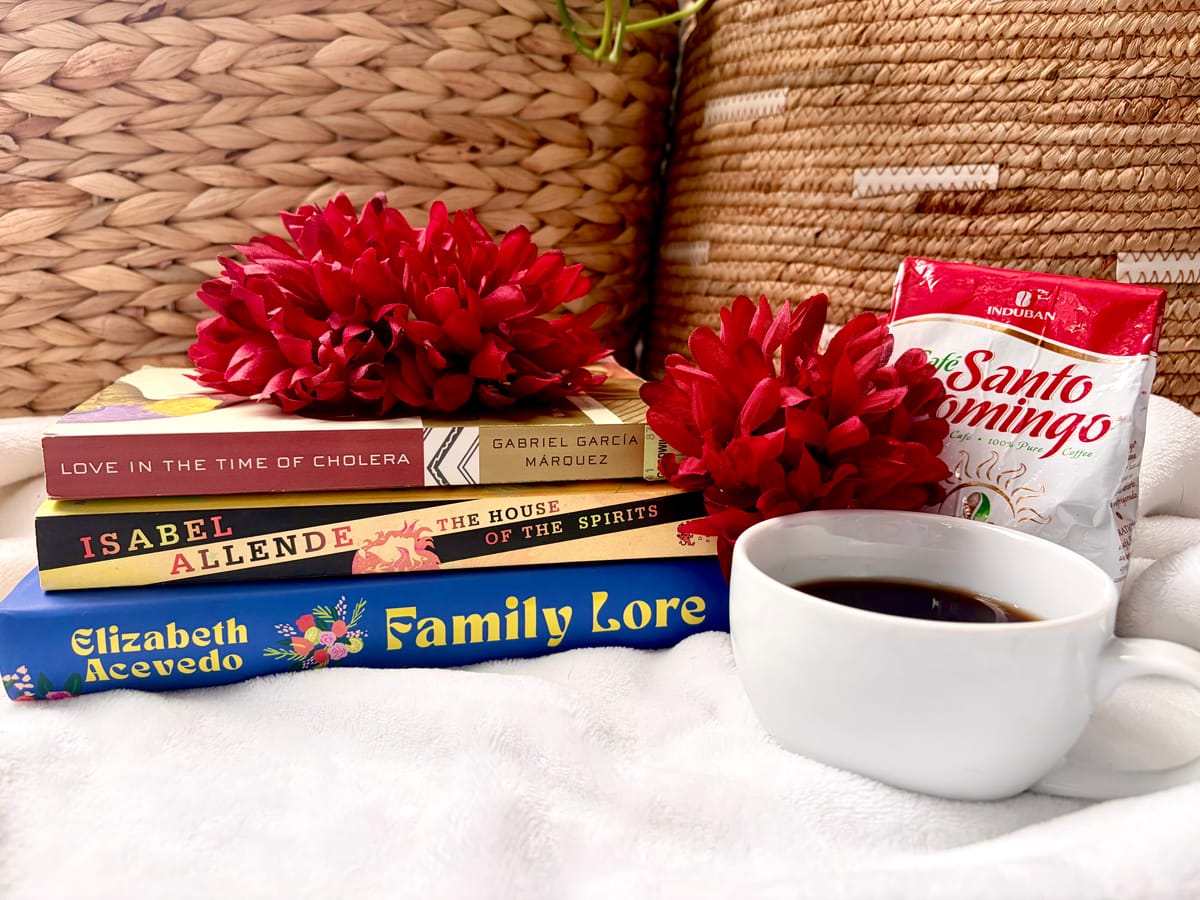
I even believed that "people like me” couldn't make it as authors. It wasn't until I came across Isabel Allende and Gabriel García Márquez that I realized Latine writers could not just make it as authors but actually leave an enduring footprint in the world of literature.
I can't remember how it finally clicked for me—embarrassingly, sometime in my late 20s—that I should write about characters like me. It might've been something I read online, a video I watched, or even a conversation with my sister, where someone said, "We need more books with diverse protagonists.”
At the time, I'd been writing an alternative historical fiction novel (i.e., using the aesthetics of a certain period of time but diverging from actual historical facts—much like Game of Thrones or The Poppy War), inspired by the Romanovs. I'd set this novel in Europe, and it was after this tidbit of information infiltrated my neurons that I came to realize how starkly Caucasian my cast of characters for this novel was.
Immediately, I began to course correct. I changed the setting to a fictional, reimagined South America. My characters took on the faces and names of Latin Americans. The story became one about colonization and about the repercussions of the oppression and erasure of a people, about wanting to take back what's inherently given to you by the land, but also about trying to find the best person to lead this community. If anything, transforming this story from purely European to one about a fictionalized Latin America with POC characters made it richer and more layered.
I did wind up getting stuck on how to wrap up that story, but I do plan to get back to it. While I waited for my muse to reveal the answers to me, I began working on my current novel, and these characters have been Latine from their conception.
And it has been a genuine joy to write these Latine characters—to see myself reflected in their customs and traditions, in the way Cheska constantly slips into Spanglish, in the way Enzo sings mariachi songs when he's drunk, and in Nina's craving for arepas post-inebriation. This novel is now tied to me in a way more powerful than an umbilical cord.
My hope is that readers who once hoped to see characters like themselves represented in literature will find something that resonates with them in my novels. A reference that makes them fully lean in like that meme of Leo DiCaprio pointing, that gives them that little hit of dopamine we're all incessantly reaching for.
Representation matters. Diverse representation even more so. I can't wait for everyone to meet my characters, who I think will fill the world with much more color and flavor and a tiny (read: HUGE) piece of what lives in my heart.